
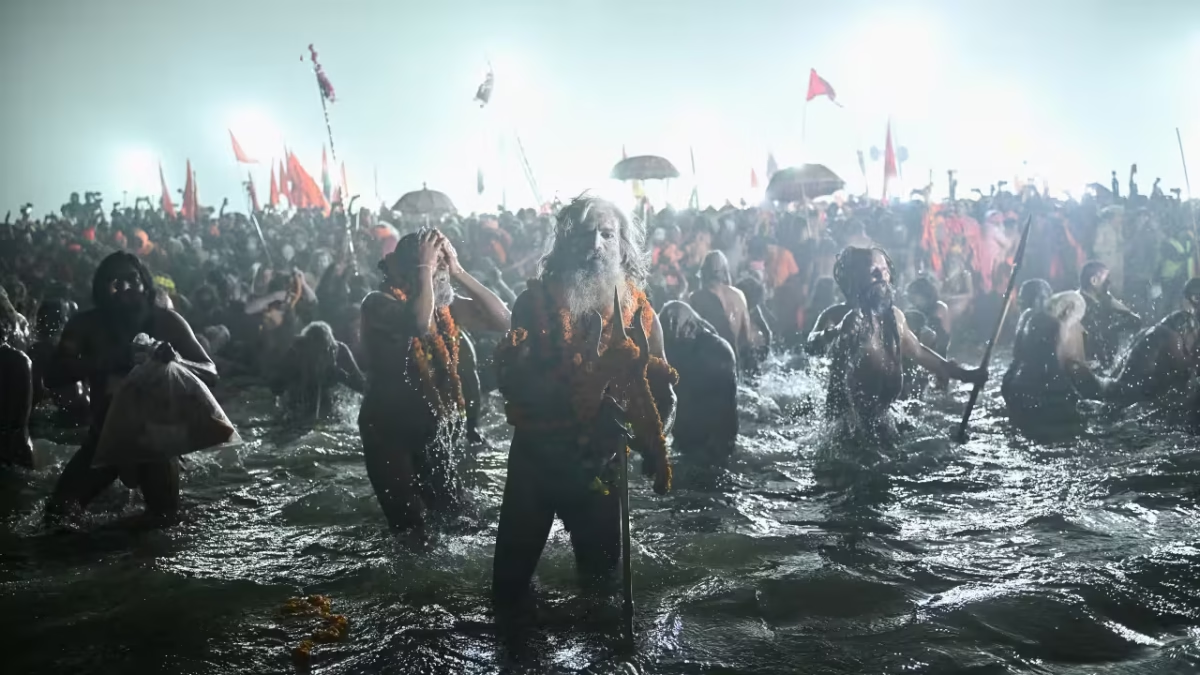
The fabric of India is woven with the threads of culture, art, and spirituality, with religion in its background. Religion not only stabilizes and supports, the fabric but ensures that its soul is well adjusted into day-to-day life without losing its original essence. Amidst all the religious celebrations it’s Maha Kumbh- the largest gathering in the world, that stands out leaving the world in awe.
This great festival of Maha Kumbh follows the solar cycle of the planet Jupiter for twelve years. And it is incomplete without the presence of Naga Sadhus. Let us find out the importance of these mysterious, spiritually inclined people who are the life and glory of the Mahakumbh.
Naga Sadhus: The Ascetic Warriors of India
Naga Sadhus are ascetic monks affiliated with various Akharas (monastic orders), also known as Naga Babas. Historically, they were known to be protectors of Hindu pilgrims, temples, sacred texts, and scriptures from foreign invasions. Their lives have always been the epitome of renunciation and dedication to higher spiritual goals. Their extraordinary balance of spiritual wisdom, physical discipline, and mental fortitude earned them the title of “spiritual warriors.” Second to the holy dip, the Nagas are the true glamour of the Maha Kumbh.
Nagas and their Enigmatic Persona

The enigmatic demeanor of the Nagas creates a feeling of awe and reverence in the beholder. They project the part of the society that is at the epitome of renunciation and dedication. Their ash-covered bodies, matted locks, minimal clothing, and signature weapons sing the glory of these spiritual warriors. Today we may not need them to protect our Dharma, and they have been living a life that is completely focused on spiritual growth and liberation (moksha), but their sacrifices and willingness to protect the dharma and simple householders in the past cannot be overlooked.
Why is Their Dip Called Shahi Snaan?

The bathing of Naga Sadhus in the holy river is called “Shahi Snaan,” which means “Royal Bath.” In India, people always consider the spiritual temperament of a person with reverence. A saint is always honored and given a place no less than a king’s. Following the same culture The Naga sadhus who renounced worldly life to attend to their inner calling along with the vow of protecting the Dharma are given the first preference of taking the holy dip in Maha Kumbh.
This ritual is deeply rooted in the belief that bathing in sacred rivers at the time of Kumbh washes away sins and opens the path to moksha while Nagas take the holy dip for purification of the soul and seek blessings to overcome the difficulties coming in the way of their moksha. This ascertains their first right on the holy dip because working towards the spiritual ascent is the most important step of human consciousness.
When each Akhara comes one after another to bathe with full enthusiasm, conches, drums and their signature weapons it is no less than a picturesque image. The spiritual authority and reverence of Naga Sadhus have made each morning bath a grand ritual. Their holy dip shows the triumph of spirituality over materialism and sets the tone of the entire Kumbh Mela.
What if there were no Naga Sadhus in the Kumbh?
Kumbh without Nagas would be like Christmas without Santa. The Naga Sadhus carry the spiritual legacy of Hinduism. In Kumbh, they are there as the bearers of divine wisdom. Their rituals and presence provide a sense of continuity of India’s ancient spiritual traditions from the past to the present. And by taking the first holy dip, they initiate the sanctification of the entire Mahakumbh. Without them, the Kumbh will be at:
Loss of Guardianship:
The Kumbh would lack the guiding force of the guardians of the holy texts and rituals that the Naga Sadhus provide. Moreover, it would be disrespectful to the guardian of sacred text for their rigorous effort.
Erosion of Heritage:
The Nagas carry our religious history. They represent the provision of having a religious army in Hinduism. Without these religious warriors, their rituals and practices unique to the Sadhu-hood might fade away, leading to a loss of cultural heritage.
Weakened Symbolism:
The grandeur and sanctity of the ‘Shahi Snaan’—the royal bath—and the Naga’s procession would be compromised, affecting the event’s overall grandeur and magnificence.
How to Become a Naga Sadhu?

Along with all the glamour the journey of becoming a Naga Sadhu is very tough and demanding. Before becoming a Sadhu it is necessary to be a Sadhu (the one who masters). As a Sadhu is ready to renounce worldly pleasures completely and dedicate himself to spirituality. The process has a few steps:
Initiation:
The aspirant must first seek the guidance of a guru, a senior Naga Sadhu, and express their intention to join their akhara (monastic order).
Training:
The guru evaluates the aspirant’s commitment and spiritual inclination before accepting them. If the aspirant fails in the evaluation, the journey ends before starting. The training in the akhara involves mastering yoga, meditation, and various spiritual disciplines.
Renunciation:
The aspirant undergoes a ceremony of renunciation, wherein they symbolically sever ties with their past life, including family and material possessions, and start a new life as Sadhu.
Diksha (Initiation Ceremony):

During the initiation ceremony, the aspirant formally becomes a Naga Sadhu. This includes taking vows of celibacy, asceticism, and devotion to spiritual practices.
The transformation into a Naga Sadhu is not merely a change in appearance but is believed to have a profound spiritual rebirth that requires immense discipline and determination.
Contribution to Society
Nagas live a life of renunciation, yet their contribution to society is profound in many ways:
Spiritual Guidance:
They are spiritual guides who share ancient wisdom and teachings with devotees seeking solace and enlightenment.
Cultural Preservation:
Naga Sadhus are custodians of Vedic traditions, ensuring that rituals and practices are preserved for future generations.
Inspiration:
Their unwavering commitment, tough disciplined life and detachment inspire people to lead more balanced and meaningful lives.
Symbol of Unity:
Their participation in events like the Kumbh fosters unity and collective spirituality among diverse communities. They are the living proof of the acceptance of even the extreme faith in Sanatan Dharma.
Self-Realization before the Holy Dip
The completion of the twelve-year cycle of Jupiter calls for Kumbh, but this year (2025) is the twelfth of twelve years, which last happened 144 years before, and the next will be after 144 years, a rare opportunity to seek blessing for those who believe in it. To reap the blessings of this rare holy dip, one should prepare oneself beforehand.
During Kumbh, the celestial arrangements are such that they bestow positive vibrations when combined with the water element. But if the body of the pilgrim is not awakened, the positive effect of blessings is minimized. So it’s better to activate your subtle system before the holy dip in Mahakumbh through Kundalini awakening. Having Kunalini awakened a seeker gets all the blessings that a Naga after the immense penance attains.
Click here to locate the Sahaja Yoga pandal for your Kundalini awakening before the holy dip. You can also have your self-realization online before going to MahaKumbh. Click here for online self-realization.
Conclusion
Naga Sadhus are not just ascetics or religious warriors but living embodiments of India’s spiritual heritage. Their commitment to renunciation, discipline, and devotion makes events like the Mahakumbh more glorious.
They inspire millions with their profound dedication, also ensuring that ancient traditions remain alive in a rapidly changing world. The Kumbh Mela without the Naga Sadhus would lose its soul, underscoring their irreplaceable role in preserving and propagating India’s timeless spiritual legacy.
Image: Pinterest,